Manual spraying
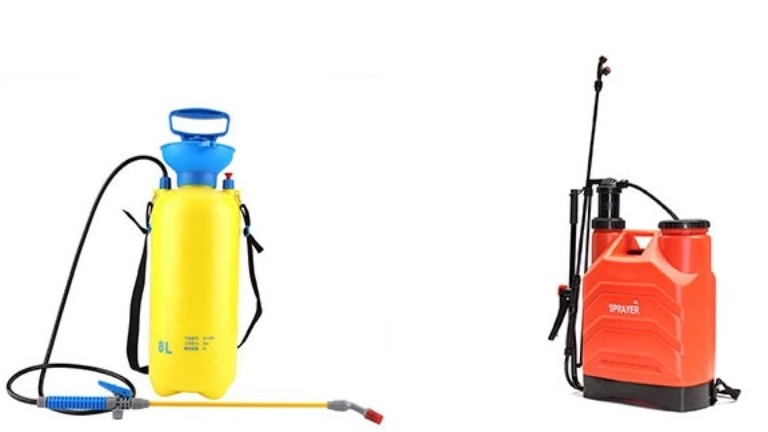
Hand sprayer was the first type of sprayer that was made and most gardeners are familiar with it and have experience using it. It is usually a closed tank of various sizes that is placed on the ground. They have a hose that leads to the sprayer and has a handle on top of it. You put the chemicals inside and replace the top. Then you use the handle on the lid as a pump to increase the pressure in the tank. While the tank is pressurized, you pull the trigger on the rod to spray the chemical. When the pressure is down, you can pump it up again if you have more spraying to do.
The positive aspects of hand sprayers are that they are often very durable. It can be of almost any size to fit any need and is easy to use. It does not require electricity and is relatively cheap.
The downside to using a handheld sprayer is that they can be quite clumsy and difficult to move around your yard, especially larger yards. They can be quite heavy, so many people put them on a trailer or wagon that they can pull, but this is an extra expense and not always easy to move. Wagons easily overturn, especially in soft soil, leading to hazardous chemical spills.
Benefits:
Available in any size
Easy to use
durable
Cheap
The back sprayer
The backpack sprayer is practically the same as the hand sprayer and has the same function. The main difference is that it sits on your back, and instead of a pump handle on the lid, there's usually a handle that sticks out from your side that you use to pump pressure into the tank. The spray nozzle is the same in both devices.
The upside of a backpack sprayer is that it is much easier to move around the yard and apply chemicals where needed. With the spray nozzle in one hand and the handle to increase pressure to the tank in the other, you can work until the job is done or the chemicals run out without stopping or breaking concentration. By connecting the device to the back, the risk of accident or spilling it is also less.
The downside to backpack sprayers is that they are limited to a few gallons or too heavy to carry. Choosing a good model is more difficult because you have to worry about the fit, comfort and durability of the straps. It is harder to see how much product is left during operation, and knapsack sprayers are often more expensive.
Benefits:
Easy to carry
Complete tasks without interruption
Less accident risk
The battery power of the sprayers
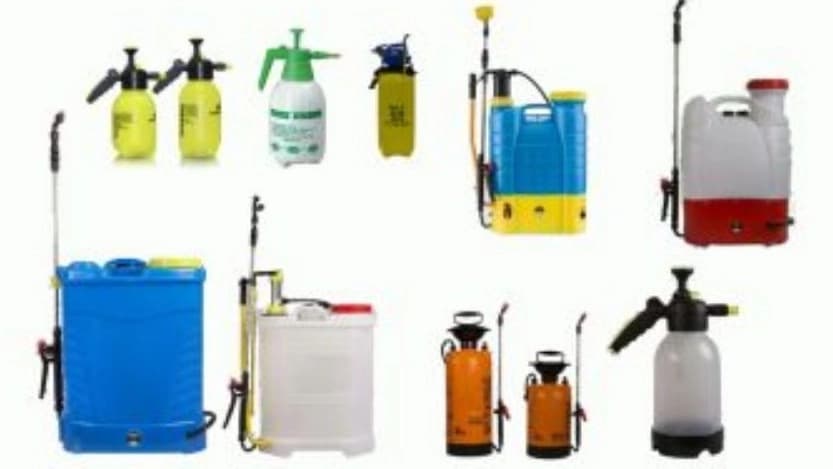
One of the modern features that you can find in both types of sprayers is battery power. Battery power eliminates the need to manually pump pressure into your tank. This allows you to maintain constant pressure for an even chemical distribution that is not possible by hand. In many cases, these devices spray more and require less movement, and since the device is powered, it may offer an LED display or alarm to let you know when your chemical is running low. . Because you have more pressure, the sprayer may have more nozzles for different spray patterns.
The disadvantage of rechargeable sprayers is that you have to keep the batteries charged and if they lose their charge too quickly, you may need to postpone your spray. However, if you find it difficult to pump enough pressure into your tank, you may find the battery just what you need.
Benefits
Constant pressure
Powerful spray
Additional features